Domestic Hot Water Restoration • Manhattan
Water Heater Repair in Financial District, Manhattan
Losing reliable domestic hot water disrupts daily life in any Manhattan residence. Whether dealing with a sudden burner lockout, failing electric heating elements, or active tank weeping, we provide expert water heater repair in Financial District, Manhattan, delivering rapid diagnostic troubleshooting and safe mechanical repairs.
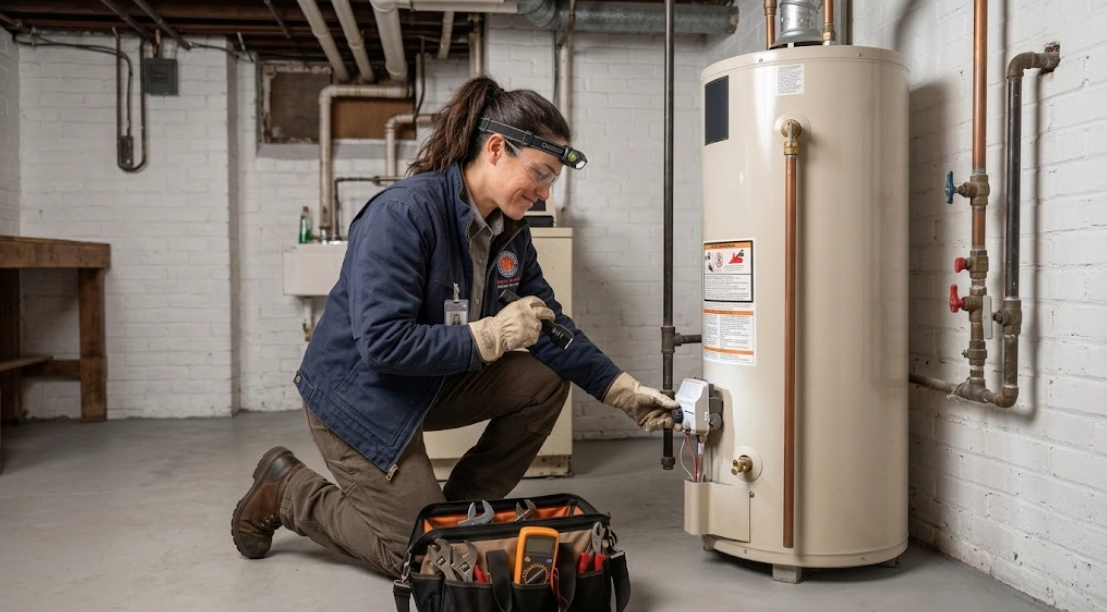
Diagnosing and Resolving Domestic Hot Water Failures
In Financial District residential condominiums, historic converted commercial lofts, and multi-unit apartment complexes, hot water systems operate under continuous mechanical demand. Systems range from individual in-unit electric tankless and high-capacity storage units to indirect domestic water tanks connected to central heating plants.
When a property encounters a sudden no hot water repair Financial District Manhattan emergency, the cause may stem from an electrical component breakdown, gas burner failure, or an external piping breach. Our technicians methodically test heating elements, gas control valves, thermal switches, and temperature relief valves to pinpoint the issue accurately.
Immediate Leak Containment Protocol
If you discover your water heater leaking Financial District Manhattan mechanical closet, turn the cold-water inlet valve located above the tank clockwise to stop water supply. Shut off electrical power or turn the gas valve to 'OFF', and call dispatch at (315) 202-8009 for urgent service.
Comprehensive Diagnostics for All Water Heater Configurations
Our mechanical team provides specialized service across diverse residential heating systems:
- Gas-Fired Water Heaters: We provide specialized gas water heater repair Financial District Manhattan service, diagnosing pilot thermocouple failures, electronic hot-surface igniters, gas control thermostats, and atmospheric draft diverters while maintaining strict compliance with our gas line repair and inspection standards.
- Electric Storage Water Heaters: For modern high-rises where gas piping is restricted, we deliver certified electric water heater repair Financial District Manhattan solutions, testing dual upper/lower immersion elements, high-limit thermal reset buttons, and magnetic relays.
- Indirect Water Storage Tanks: In properties utilizing central hydronic heating, we service indirect stainless steel coils tied to central boiler repair systems, circulator pumps, and zone aquastats.
- Tankless On-Demand Units: Descaling mineral buildup from high-efficiency copper heat exchangers, clearing flow sensors, and resolving exhaust fan error codes.
Is It a Water Heater Leak or a Concealed Pipe Breach?
Homeowners frequently discover standing water pooling around the base of their water heater and assume the tank has ruptured. However, in stacked high-rise buildings near Battery Park City or Wall Street, water traveling across concrete floor decks often settles into utility closet floor drains.
Before condemning an expensive water heater, our technicians inspect the tank shell and verify whether the water originates from an overhead pipe leak, a weeping temperature-and-pressure (T&P) valve, or an internal branch failure requiring our specialized leak detection in Financial District services. Distinguishing between a tank rupture and a localized pipe fault saves building owners thousands of dollars in unnecessary equipment replacement.
Repair versus Replacement Decision Guide
Determining whether to service an existing water heater or invest in a modern replacement depends on age, tank condition, and component failure:
- When Repair Is Appropriate: If the unit is under 8 to 10 years old and the steel tank is structurally sound, replacing electrical heating elements, thermostats, burner assemblies, dip tubes, or pressure relief valves is highly economical and extends service life.
- When Replacement Is Unavoidable: If rust-colored water is leaking directly from the bottom seam or through the external outer jacket, the inner glass lining has ruptured. Steel tank corrosion cannot be welded or sealed; immediate replacement is mandatory to prevent catastrophic tank flooding.
Step-by-Step Service Visit Overview
Our diagnostic service call follows a rigorous technical sequence:
Safety Inspection
Checking electrical voltage, gas shutoff valve operability, flue draft ventilation, and structural containment pans.
Component Diagnostics
Testing resistance across heating elements, verifying gas manifold pressure, and checking T&P relief valve seals.
Authorized Repair
Installing OEM manufacturer replacement parts, tightening dielectrics, or upgrading faulty thermal controls.
Operational Validation
Refilling the tank, bleeding air, cycling the burner or elements, and verifying calibrated hot water delivery at 120°F.
Frequently Asked Questions About Water Heater Repair
What should I do first if my water heater is leaking onto the utility room floor?
Immediately shut off the cold-water inlet valve located on the supply pipe directly above the tank. Next, turn off the electrical circuit breaker or switch the gas control dial to 'OFF' to prevent heating element burnout or overheating.
How can I tell if water on the floor is from the heater tank or a concealed pipe leak?
Check whether the temperature and pressure (T&P) relief valve discharge pipe or tank seams are wet. If the tank shell is completely dry while water pools on the slab, our electronic leak detection methods verify whether a concealed domestic supply line or riser is the true source.
Why is my water heater making a loud popping or rumbling sound when running?
Rumbling and popping noises occur when heavy mineral sediment settles at the bottom of the tank. Steam bubbles become trapped beneath the sediment layer and burst violently when heated, reducing heating efficiency and accelerating tank failure.
When does a malfunctioning water heater require replacement rather than repair?
If the internal steel tank shell has corroded and is leaking water through the bottom jacket, repair is impossible and the unit must be replaced. Conversely, faulty heating elements, thermostats, gas control valves, and pressure relief valves can readily be replaced.