Certified Gas Piping • Lower Manhattan
Gas Line Repair & Inspection in Financial District, Manhattan
Natural gas systems in Lower Manhattan require rigorous technical oversight and strict adherence to NYC safety regulations. We provide licensed gas line repair in Financial District, Manhattan, delivering precision pipe testing, gas appliance hookups, and NYC Local Law 152 periodic gas piping inspections.
Critical Gas Emergency Instructions
If anyone smells the distinctive rotten-egg odor of natural gas, hears hissing near a meter or fuel line, or suspects an active gas leak, they must evacuate the building immediately.
- Do NOT operate light switches, elevator buttons, pull chains, or electrical outlets.
- Do NOT use landline phones or cell phones inside the building.
- Do NOT light matches or attempt to locate the source of the leak.
- Leave all doors open behind you as you exit to ventilate the space.
- Call 911 and the Con Edison gas emergency hotline (1-800-75-CONED) from a safe outdoor distance.
Never attempt DIY gas repairs. Routine inspection and scheduled repairs should only occur after the area has been declared safe by emergency utility personnel.
Comprehensive Gas Piping Services in Financial District
Natural gas powers essential building systems in Financial District, including central heating boilers, domestic water heaters, and commercial restaurant kitchens. In historic converted commercial high-rises and pre-war residential buildings, black iron threaded gas lines frequently run across shared basement corridors, through vertical utility shafts, and into individual condominium units.
Over time, building vibration, environmental moisture, and mechanical stress can lead to threaded joint deterioration or corrosion on pipe supports. Our licensed plumbing mechanics provide scheduled diagnostic evaluations, resolving pipe decay, performing certified pressure tests, and executing code-compliant repairs that restore gas service safely.
Schedule Licensed Gas Piping Inspection
Need routine gas piping evaluation, utility violation remediation, or code certification? Contact our office at (315) 202-8009 to speak directly with our licensed gas team.
NYC Local Law 152: Periodic Gas Piping Inspections
Under New York City Local Law 152 of 2016, building owners face strict statutory requirements regarding periodic gas piping safety:
- Applicable Buildings: All commercial, co-op, and condominium buildings throughout Community District 1 (which encompasses Financial District) must complete a comprehensive gas piping inspection Financial District Manhattan once every four years. Single- and two-family homes classified as occupancy group R-3 are legally exempt.
- Qualified Inspectors: The physical inspection must be performed directly by a Licensed Master Plumber (LMP) or a qualified technician working under an LMP's direct supervision.
- Inspection Scope: The survey encompasses all exposed gas piping from the building point of entry up to individual tenant spaces, checking for unapproved installations, heavy corrosion, un-sleeved wall penetrations, and illegal gas connections.
- Mandatory Filings: Following the survey, an official GPS-1 certification form must be submitted to the NYC Department of Buildings (DOB) within 60 days of the inspection date to avoid substantial civil penalties.
Gas Appliance Hookups and Line Alterations
Whether remodeling a luxury kitchen or outfitting a commercial space, NYC Fuel Gas Code strictly prohibits unlicensed gas work. We provide professional gas line installation for stove Financial District Manhattan appliances, installing heavy-duty brass shutoff valves, commercial-grade flexible stainless connectors, and sediment drip legs.
We also ensure seamless gas integration for residential water heater repair units and central boiler repair burners, verifying adequate fuel pressure delivery and proper flue drafting.
Non-Emergency Diagnostic Testing Protocol
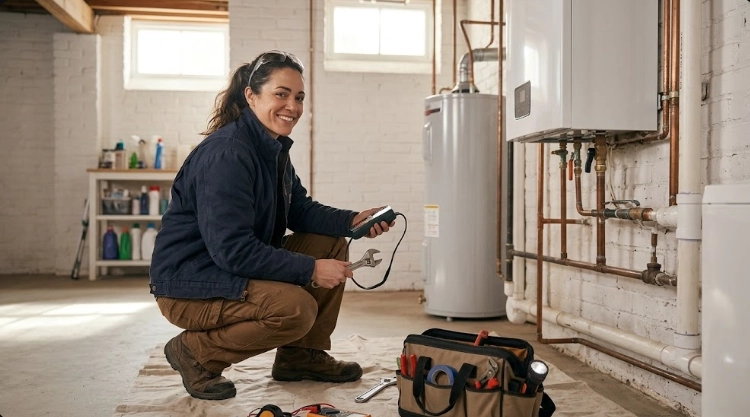
During scheduled service visits, our technicians utilize non-destructive diagnostic methods to evaluate gas piping integrity:
Visual Condition Survey
Inspecting exposed black steel piping, union fittings, meter bars, and pipe hangers for paint degradation and flaking rust.
Electronic Sniffer Testing
Calibrated combustible gas detectors (CGIs) survey all joints, valves, and regulator vents to identify trace parts-per-million gas accumulation.
Hydrostatic / Air Pressure Decay
Lines are isolated, pressurized with inert gas, and monitored with digital test manometers to certify that zero pressure drop occurs over time.
Approved DOB Documentation
Generating formal test reports, submitting DOB inspection filings, and coordinating utility service sign-offs where required.
Frequently Asked Questions About Gas Line Repair & Inspection
What should I do immediately if I smell natural gas in my apartment or building?
Evacuate the building immediately. Do not operate any electrical switches, pull cords, use phones, or ring doorbells, as any spark can ignite accumulated gas. Call 911 or the Con Edison gas emergency hotline from a safe location outdoors.
What is NYC Local Law 152 and which buildings are subject to inspection?
Local Law 152 of 2016 mandates periodic inspection of exposed gas piping once every four years for all NYC buildings, except those classified in occupancy group R-3 (1- and 2-family private homes). Inspections must be performed by a Licensed Master Plumber (LMP) or qualified inspector under an LMP's supervision.
Can a homeowner or handyman install a gas range or dryer in Manhattan?
No. Under the New York City Fuel Gas Code, all gas piping alterations, valve replacements, and gas appliance connections must be executed by a Licensed Master Plumber with appropriate permits and utility sign-offs.
How is a non-emergency gas leak pinpointed during a professional inspection?
Licensed mechanics utilize calibrated combustible gas indicator (CGI) sniffers, ultrasonic leak detectors, and non-corrosive bubble solution testing across all accessible threaded joints, shutoff cocks, and union connections to isolate microscopic seepages.